
Origins
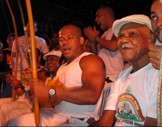
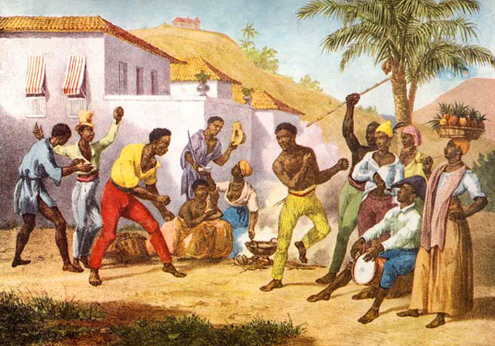
Capoeira (pronounced “cap-o-wearah”) is an extraordinary and unique martial art that finds its origins among the African slaves in Brazil. It combines self-defense, acrobatics, dance, music and song. Its martial aspects began developing in the 16th and 17th centuries, as a means of protection by the slaves from their owners. It was consequently banned, and became hidden in a dance; it was ‘played’ within a circle of onlookers and musicians using percussive and stringed instruments- primarily the berimbau, a stringed bow-like instrument from Angola. It was in the circle (a roda in Portuguese) where highly skilled capoeristas performed their art using a system of kicks, leg sweeps, and flips.
The 20th Century
In the 1930’s Mestre Bimba and Mestre Pastinha formed the first ‘legitimate’ capoeira schools, formalizing its movements and customs. Bimba focused on the combat in the art form, creating the more systematic Capoeira Regional. Pastinha reclaimed its traditional, ritualistic aspects for what became known as Capoeira Angola. Nowadays schools everywhere play many variations of capoeira.
Today
Because Capoeira is such a unique combination of physical skills, it develops endurance, flexibility, and alertness in its practitioners as well as strength and mental balance. Live traditional music sets the tempo for the capoeiristas while they practice a free and creative interplay of movements. The beauty and excitement that Capoeira presents has become world-renowned.